
Finding a pair of headphones that can survive your sweat, stay secure during a sprint, and actually sound good is harder than it should be. The market is crowded, and the wrong choice can turn a great run into a frustrating experience with constant readjustment, painful pressure points, or sudden battery failure. Many runners in California also have to consider warm weather, coastal winds, and the occasional surprise drizzle. This guide breaks down what actually matters when choosing the best running headphones in CA, covering fit, durability, sound quality, battery life, and the specific features that make a difference on real roads and trails.
Key Takeaways
- The best running headphones are determined by your running environment—road runners need awareness of traffic, while trail runners can prioritize sound isolation.
- Ear hooks and flexible wingtips are more reliable than standard earbuds for staying secure during high-impact movement.
- IPX ratings matter in California because sweat, marine layer fog, and unexpected drizzle are common; look for at least IPX4, ideally IPX5 or higher.
- Battery life should be balanced against charging speed—fast charging is more useful than a long battery that takes hours to refill.
What Makes a Running Headphone Different From a Regular One?
Regular earbuds are designed for sitting, commuting, or casual listening. Running introduces unique demands: constant motion, sweat exposure, and the need for situational awareness. The best running headphones in CA are engineered with secure fit mechanisms, sweat-resistant materials, and controls that are easy to use while moving. Standard earbuds often lack the grip needed to stay in place during a stride cycle, and they rarely have the moisture protection required for long-term durability.
Another important difference is the acoustic design. Running headphones often use an open-ear or semi-open design so you can hear traffic, other runners, and cyclists. In contrast, noise-cancelling earbuds used for travel can block out those important environmental cues, which creates a safety risk on shared paths and busy streets.
Wired vs. Wireless for Running
Wireless is generally the standard for running, but it’s worth understanding why. A cable creates a mechanical connection that transfers movement noise to your ears, and it can snag on water bottles or gear. Wireless earbuds eliminate that problem, but they require you to manage battery life and connectivity. For most runners, true wireless earbuds with a reliable Bluetooth connection are the practical choice, provided the pair you choose has a strong antenna and stable codec support.
Open-Ear vs. In-Ear vs. Bone Conduction
Three main form factors dominate the running headphone category:
- In-ear with ear tips: Best sound isolation and bass response, but you lose awareness of your surroundings.
- Open-ear (ear hook style): Sits just outside the ear canal, leaving it open for ambient sound. Good balance of audio quality and awareness.
- Bone conduction: Vibrates the cheekbone to transmit sound. Leaves ears completely open, ideal for safety, but sound quality is less immersive and bass is weaker.
There is no single best option; the right choice depends on whether you prioritize audio fidelity, environmental awareness, or comfort over long distances.
Why Fit Stability Matters More Than You Think
The most common complaint among runners is that earbuds fall out or need constant adjustment. This is not just about ear size; it’s about the interaction between your anatomy, the earbud shape, and the motion of running. Every foot strike creates a small amount of vertical shock that travels through your body. If the earbud does not have a stable anchor system, it will gradually loosen with each stride.
The most reliable solutions are ear hooks (which wrap around the outer ear) or flexible wingtips (which wedge into the ear’s anti-helix area). Both distribute holding pressure across a larger surface than the ear tip alone. If you have unusually small or large ear canals, a hook design is often safer because it does not depend on a tight seal for fit security.
To find the best running headphones in ca, pay attention to the fit mechanism described in the product specs, not just the marketing language about “comfortable fit.” A product with adjustable ear hooks or multiple wingtip sizes gives you more room to dial in a secure fit.
How to Test Fit Stability Before Buying
You cannot run inside a store, but you can do a simple shake test. Put the earbuds in, then shake your head vigorously from side to side and up and down. If they move noticeably, they will likely loosen during a run. You can also simulate a run by doing a few jumping jacks. This is not a perfect test, but it reveals the biggest fit failures without a full workout.
Understanding IPX Ratings and California Weather
IPX rating tells you how well a device resists moisture. For running, the scale matters in this way:
| Rating | Protection Level | Relevance for Running |
|---|---|---|
| IPX4 | Sweat and light splashes | Minimum recommended for casual runners |
| IPX5 | Low-pressure water jets | Good for heavy sweaters and coastal drizzle |
| IPX6 | High-pressure water jets | Handles heavy rain and extreme sweat |
| IPX7 | Temporary immersion | Not needed for running but nice insurance |
California’s climate varies dramatically. Coastal runners face marine layer fog, which is effectively a fine mist that settles on everything. Inland runners experience dry heat, which causes sweat to evaporate quickly but still leaves salt residue. Trail runners in Northern California can get caught in sudden downpours. An IPX4 rating is the bare minimum, but IPX5 or higher provides meaningful extra protection for year-round use.
Charging Port Seals Are Part of the Equation
Moisture can damage the charging contacts even if the earbuds themselves are well-sealed. Look for a charging case with a magnetic lid and a rubber seal around the charging port. This prevents condensation from accumulating inside the case while your earbuds recharge. Some cases vent moisture to the outside which helps with long-term reliability.
Sound Quality and Ambient Awareness Balance
Sound quality is subjective, but for running there are objective considerations. You need to hear bass lines and rhythm clearly, but you also need frequency response that doesn’t mask important environmental sounds. A headphone with heavy bass boost might sound impressive indoors, but on a trail, it can obscure the sound of an approaching mountain biker.
Transparency mode, available on many modern earbuds, uses microphones to pump ambient sound into your ears. This works well, but it can feel unnatural because it amplifies wind noise. Passive ambient hearing—where the earbud simply does not block the ear canal—is often more predictable during a run. Bone conduction headphones offer the most reliable ambient awareness because they do not cover the ear at all.
Wind Noise Is an Overlooked Problem
Wind noise is one of the biggest complaints from runners. When you run at a pace faster than about 6 minutes per kilometer (roughly 10 minutes per mile), airflow over the microphone grilles creates turbulence. This manifests as a loud roaring sound in your ears. Earbuds with small, recessed microphones or wind-reducing mesh perform better. If you run in open, exposed areas like the California coast, wind noise can overpower your music entirely. Look for product descriptions that mention wind noise reduction or mesh-protected microphones.
Battery Life and Charging Considerations
Typical running headphones offer between 6 and 10 hours of playback from the earbuds themselves, with the charging case adding another 20 to 30 hours. For most runners, that is more than enough for a week of daily workouts. The more important spec is fast charging time—how quickly the earbuds regain useful battery after a short charge. A pair that gives you 1 hour of playback from a 10-minute charge is far more useful than one that needs 2 hours to reach full capacity.
Also pay attention to the battery in the charging case. A case with a USB-C port is standard, but wireless charging is a useful feature for runners who keep a charging pad on their desk. If you frequently forget to charge, a case that supports wireless charging makes it easier to top up passively.
Controls and On-the-Run Usability
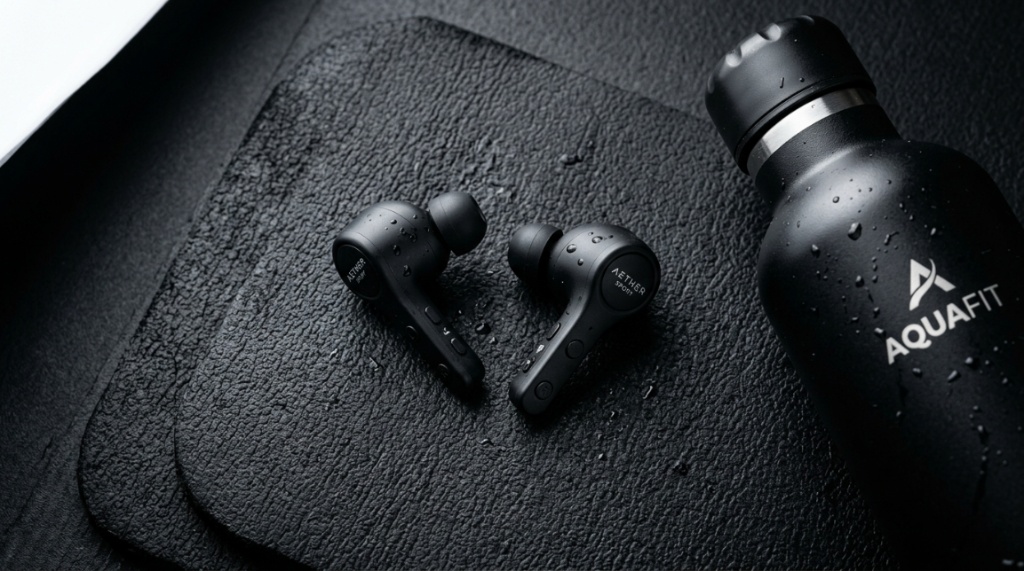
During a run, you do not want to fumble with a phone. Physical buttons on the earbuds are easier to use than touch controls because you can feel them without looking. However, physical buttons require you to press against your ear, which can push the earbud deeper and cause discomfort over time. Touch controls avoid that problem but are prone to accidental activation when you adjust your beanie, cap, or sunglasses.
The best approach depends on your preference. If you wear a hat while running, touch controls can be frustrating because the hat brim can brush against the earbuds and trigger unintended responses. Some earbuds let you disable touch controls or customize the gesture mapping—this is a feature worth checking for.
Voice Commands and Phone Integration
Modern running headphones support voice assistants like Siri or Google Assistant. This can be genuinely useful: you can ask for your pace, send a quick text, or adjust the volume without breaking stride. But voice activation only works well when the microphones can separate your voice from wind noise. A pair with good wind-reduction microphones makes voice commands reliable; a pair without that feature will frustrate you,
Looking for budget-friendly audio gear for your workouts? Check out our guide on Wireless Headphones Under $50 with Great Sound to find high-performing options that won’t break the bank.
Common Mistakes When Choosing Running Headphones
Many runners buy a pair of earbuds based on reviews from people who mostly use them at a desk or on a plane. That leads to several predictable mistakes:
- Over-prioritizing active noise cancelling (ANC): ANC is great for commuting but creates a safety risk on roads and trails. It also uses battery power, reducing the runtime available for music.
- Choosing a heavy pair: Heavier earbuds can feel fine when you are static, but the added mass creates more inertia with each stride, pulling them downward.
- Ignoring the case size: A bulky charging case is annoying to carry on a run, even if you do not plan to bring it with you.
- Blindly trusting battery claims: Manufacturers often test battery life at 50% volume, which is lower than what many runners use outdoors. Real-world battery life is usually about 70–80% of the claimed spec.
- Buying without considering hat compatibility: Oversized ear hooks can clash with the brim of a cap, causing pressure points behind your ears.
Recommended Approaches for Different Running Scenarios
No single pair works for every runner. The best choice depends on where and how you run.
City and Street Runners
If you run on sidewalks and roads with traffic, choose an open-ear design or a pair with a reliable transparency mode. You need to maintain awareness of cars approaching from behind and bikes coming from side paths. An open-ear model that does not block the ear canal is your safest option. Bone conduction headphones work well for this use case because they keep your ears completely open.
Trail Runners and Off-Road Enthusiasts
Trail runners can afford better sound isolation because they usually encounter less traffic. In-ear earbuds with wingtips provide the most immersive sound and the best bass response. Your main concern is battery life for long runs and moisture protection for stream crossings and bushwhacking. Look for an IPX5 rating or higher.
Gym and Treadmill Runners
If you run on a treadmill, situational awareness is less critical, so ANC is not a problem. The main challenge is sweat management. Treadmill running produces more sweat per minute because the air does not move past you as quickly. Choose earbuds with a high IPX rating and an easy-to-clean surface. Silicone wingtips are easier to wipe down than fabric-covered designs.
Frequently Asked Questions
Are bone conduction headphones as good as regular earbuds for music?
Bone conduction headphones offer less bass and less fidelity than in-ear earbuds. However, they provide superior situational awareness and are extremely comfortable for long runs because they do not press into the ear canal. If music quality is your top priority, in-ear earbuds are better. If safety and comfort matter more, bone conduction wins.
How long should running headphones last before needing replacement?
Most quality running headphones last between one and three years with regular use. The limiting factor is generally battery degradation, not sound quality. Sweat and moisture can shorten lifespan, which makes a high IPX rating an investment in longevity. Replacing the ear tips regularly can also extend the life of the earbuds themselves.
Can I wear running headphones under a helmet or hat?
Yes, but the design matters. Earbuds with slim ear hooks work under most bike helmets and light running beanies. Oversized over-ear headphones do not fit under helmets. For trail running with a visor or an insulated beanie, choose flat-backed earbuds that do not protrude too far from your ear.
Do running headphones come with a warranty?
Most reputable brands offer a one-year limited warranty that covers manufacturing defects but not normal wear from sweat or physical damage. Some brands offer extended warranties for an additional cost. If you run daily and push your gear hard, the extended warranty can be worth it.
Should I get a neckband or true wireless earbuds for running?
Neckbands are less likely to be lost if one earbud falls out, and they often have better microphone placement. True wireless earbuds are lighter and more comfortable for high-impact movement. For most runners, true wireless is the better trade-off, provided you choose a pair with a secure fit mechanism.
Conclusion
Choosing the best running headphones in CA comes down to understanding your environment and your movement patterns rather than chasing the highest specs on paper. Fit stability is the most critical factor because no amount of sound quality compensates for earbuds that fall out mid-stride. Moisture protection, measured by IPX ratings, becomes essential when you consider the reality of sweat, fog, and unexpected weather in California. Your preferred route—city streets, trails, or the treadmill—determines whether you need open-ear awareness or immersive isolation. Weigh battery life and fast charging against your longest typical run. And do not underestimate the importance of wind noise reduction and usable physical controls. Every one of these factors matters more than the brand name on the box.